At the heart of Superbugs is the aim of improving public knowledge on the microbial world in, on and around us. Through various projects we have tried to achieve this using a variety of different strategies. In April 2026, the latest journey began: a Superbugs Escape Room!
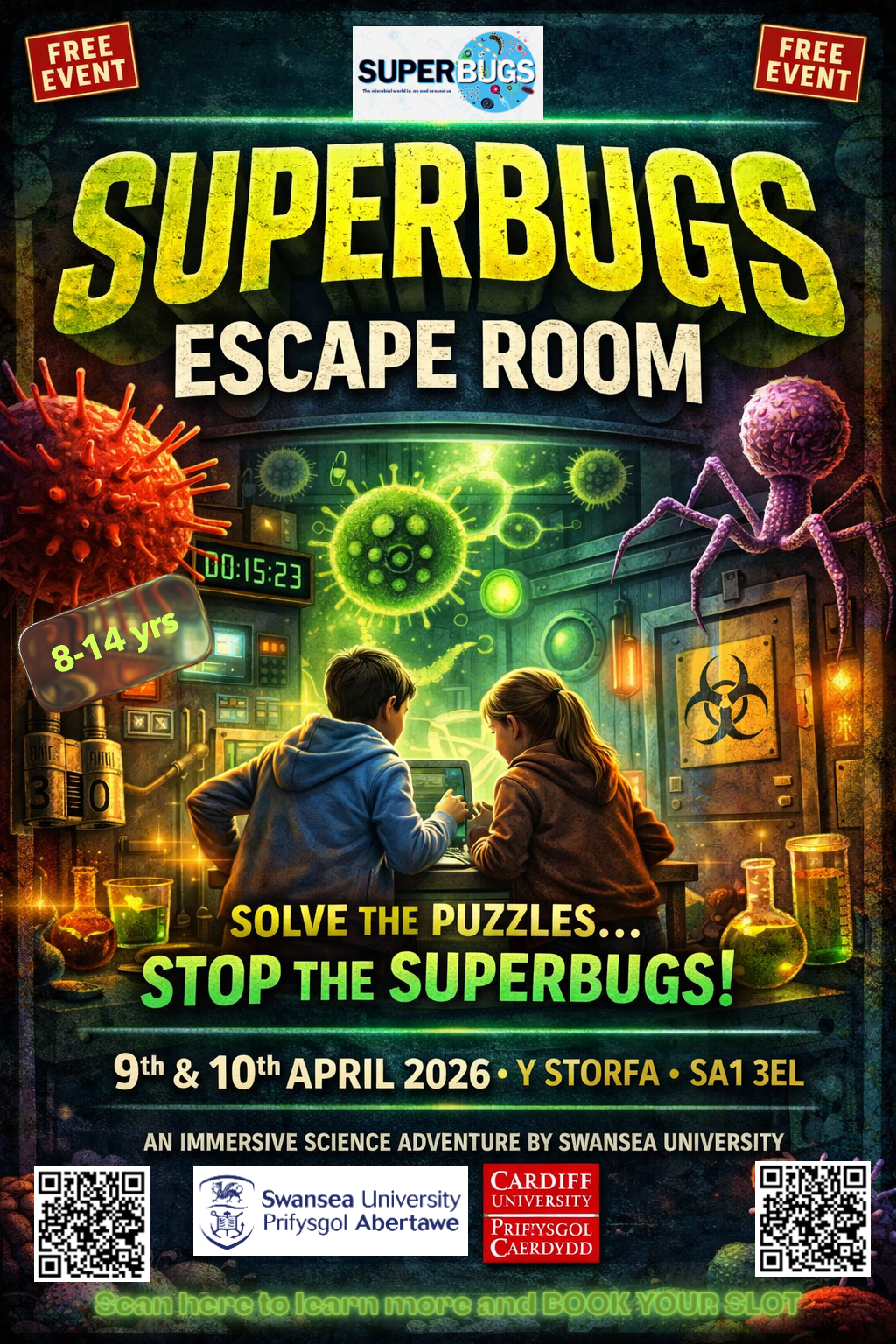
Across two days during the April School holidays, families came along to Y Storfa, a new library and community hub at the heart of Swansea city centre, to try out a variety of different puzzles, games and challenges designed to explore the potential of an escape room activity as an educational tool.
The event was promoted through an online poster and booking form. Thanks to the efforts of the Y Storfa social media team all 12 time slots across the two days were fully booked.
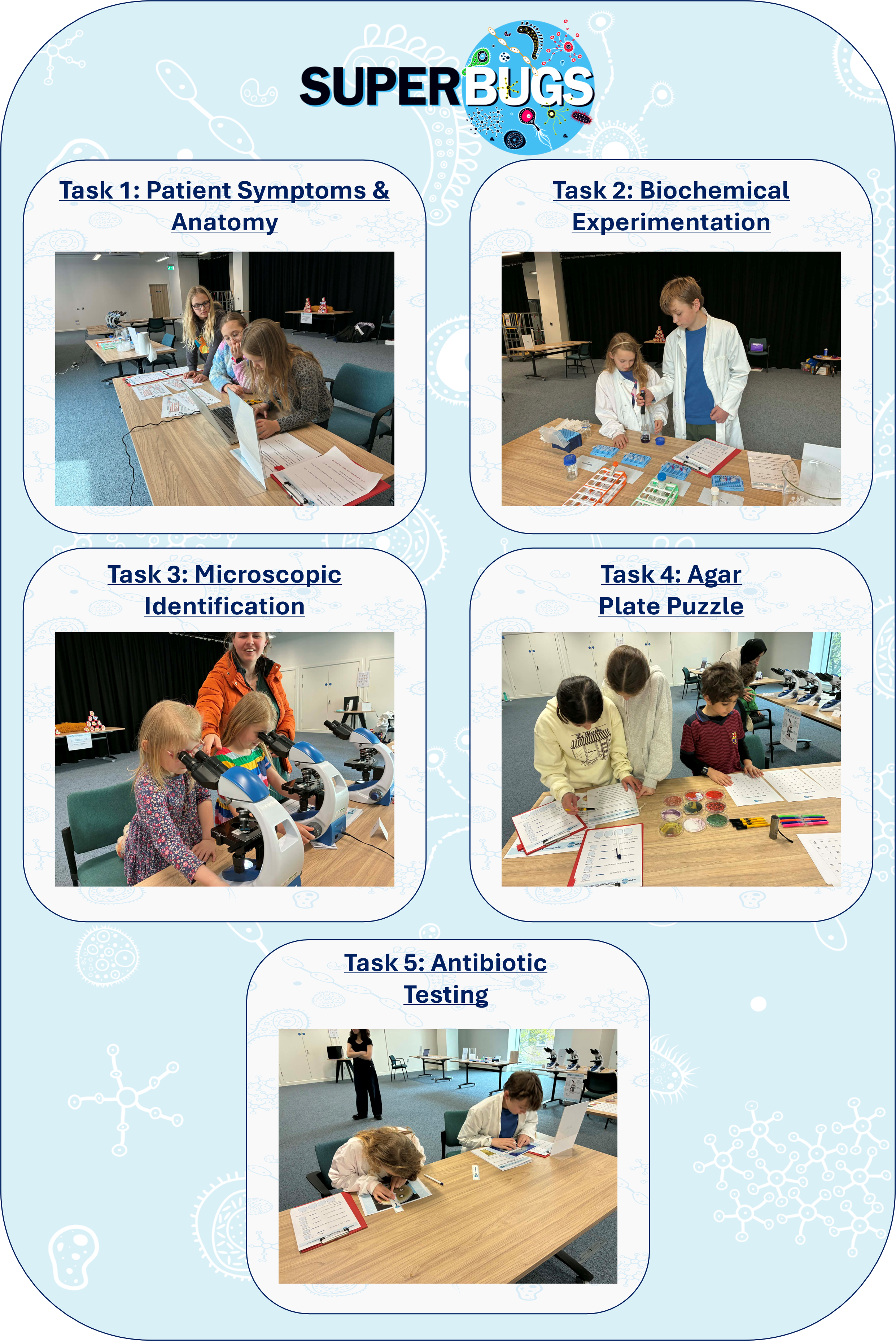
What awaited participants when they arrived, I hear you ask? Well, participants were required to save the life of an infected person by completing a number of tasks; each task giving them one part of a code needed to open a medical chest. Inside this medical chest would be the tools needed to ‘kill the infection’, treat the patients and ‘escape’. The overall narrative was aimed at providing participants with insight into the role played by Clinical Microbiology laboratories in diagnosing and treating infected patients.
Task 1: Participants were provided with details and anatomical images of four different patients. By using these details to solve online word puzzles, participants had to identify which of the four was the infected patient that needed saving.
Task 2: When identifying an infection, it is important to take the correct clinical sample. By this, we could mean urine (wee), faeces (poo), blood, sputum (snot), even swabs of wounds – anything that may contain the bacteria, viruses or fungi causing the infection. In our escape room, participants had to complete some basic biochemical testing to determine which clinical sample we needed to collect from the patient.
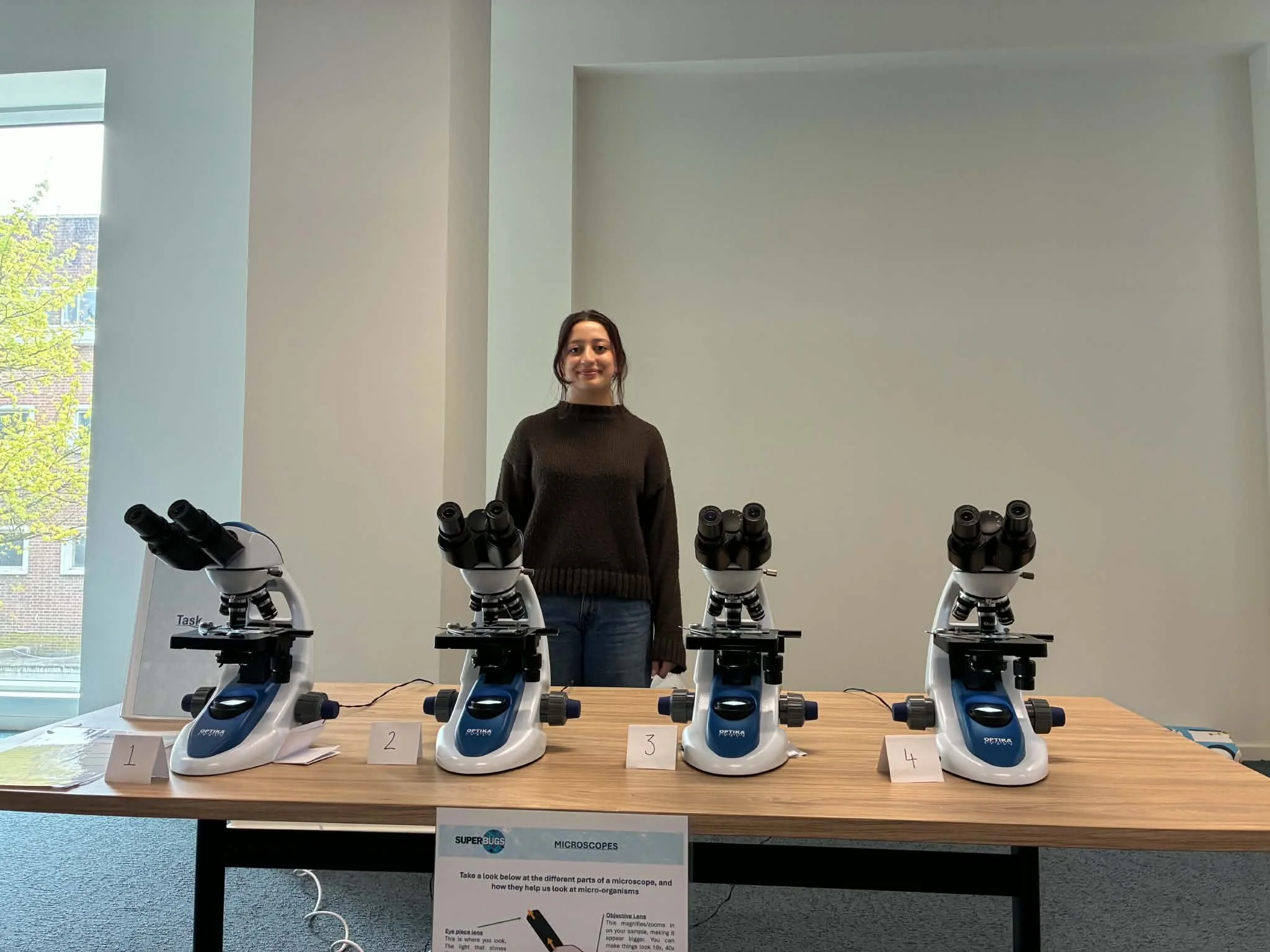
Task 3: Participants were then tasked with using microscopes to identify the correct micro-organism. They had to use their observational skills to match up colour, shape and organisation of the micro-organisms to work out which was the pesky bug causing our patient to be unwell!
Task 4: Next was time to find out the name of the infection. We can grow micro-organisms on special jelly called agar plates. Based on the colour of the organism, we can work our which species is growing. Participants had to solve a word search puzzle by using the names of different agar jellies, and the colours growing on them, to find the name of the infection.
Task 5: Finally, it was time for participants to work out which antibiotics we needed to use to kill the infection. Using measuring skills, participants had to solve maths puzzles to identify which antibiotics the infection was susceptible to (which means the antibiotics would kill the bug) or resistant to (which means the bug would not be killed).
If all tasks were completed within the time, the participants were able to open the medical cabinet and ‘kill the infection’ with our now world famous (disclaimer, it is not really world famous… yet) tin-can game!
In total, 26 young people participated in the escape room, and provided us with insightful and overwhelmingly positive feedback. Ages ranged from 6-15 years old, and even some parents couldn’t resist the interest of joining in!
Some highlights included
“fun, engaging, taught me in a fun way… Already so good, I would like to do it more”
“(the thing) I liked most was finding the clinical specimen”
“I like working with my team… add more”
Full credit goes to Zoya Soulat, an undergraduate student at Swansea University, who designed, developed, delivered and evaluated this pilot study on behalf of Superbugs as part of her Final Year dissertation project.
She did a fantastic job – well done, Zoya!
Keep an eye out across our social media channels for more opportunities to take part in the Superbugs Escape Room development!